
Last summer, Lilia Javanrouh-Givi, a singer and aspiring artist, did an internship at Theatre Passe Muraille mentoring with Artistic Director Marjorie Chan. Lilia and Marjorie met, when Lilia performed in not one but in two different productions of THE MONKIEST KING with libretto by Marjorie and composition by Alice Ping Yee Ho. Commissioned and produced by the Canadian Children’s Opera Company, each production had a cast of over 100 children from ages 5 – 18. Marjorie and Lilia never really got to know each other with a company that big, so a mentorship was a wonderful way to engage and learn more about each other’s processes and approach.
Accessibility in performance is held highly by Marjorie and TPM, both the audience and the artists. This blog post recounts Lilia’s reflections when her internship wrapped up last summer in 2925, considering access in the context of Marjorie and their shared form, opera.
[ Transcript edited for length.]

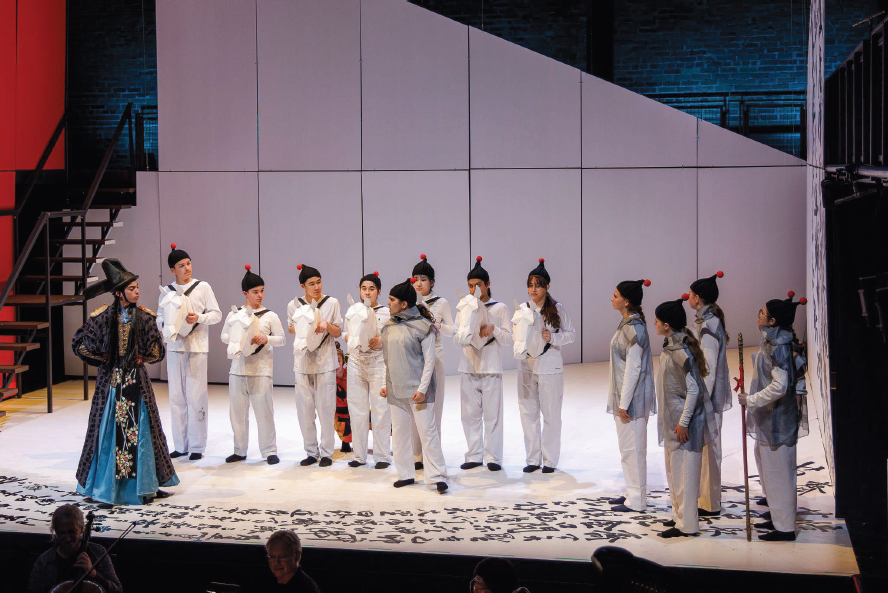
Marjorie: First tell us a bit about yourself, and how you got into opera, or music?
Lilia: I’m 16. And I’ve been doing opera for 9 years now, coming up on 9 years.
I was always interested in music. I had already been attending singing lessons at the Royal Conservatory. But it was actually my best friend moving that prompted me to join the Canadian Children’s Opera Company specifically. I wanted to keep in touch with her, and she was a part of that opera company.
Marjorie: How old were you at that point?
Lilia: I think I would have been around… 9 or 10. We had just moved into the principal chorus level. And so, the principal chorus level is, I guess, a lot more serious than the levels before, because, you know, you have rehearsals twice a week, and you start to do operas with the Canadian Opera Company which are very grand in scale and everything. But this was during the time of COVID, which was very rough for everybody.
And yeah, so I really wanted to stick it out because I really liked that feeling of being productive, I think even during COVID, when it was always just everybody was stuck at home. I still felt like I was accomplishing something by learning about singing and learning about opera, and movement, and so I really credit them for still keeping that going, even though it was difficult to do all that on Zoom.
Marjorie: You stuck [with it] through [the pandemic]. What is it that you were getting from opera at that point?
Lilia: Everybody was in the same situation, that we were all in lockdown. We were all, we had all been at this point where we were about to do an opera, right before COVID hit. We were about to do Alice in Wonderland, and then the pandemic happened, and… we all kind of had to figure it out and navigate it, kind of together, in a way. So I think I just I liked that sense of community.
But then once we were out of lockdown, I was able to be in a few operas with the COC, I was In Carmen, and in La Boheme, In [The Cunning Little] Vixen, which is where I got to do a relaxed performance for the first time. Which I also believe was the Canadian Opera Company’s first relaxed performance.
Marjorie: I’m curious, because you spent a lot of time on stage, what drove you to want to see behind the curtain a little bit [through a mentorship at TPM]?
Lilia: I felt like I’m still doing things on the stage, I’m still with the CCOC, and I’m going to continue doing that. At least for, I’m hoping, for the next few years. And so I wanted to spend my summer learning about something completely new. So that then I could feel, maybe more informed and secure when I’m doing things like performing. Even as a performer, it’s crucial to know these things, to know what goes on behind the scenes, to know how you can help. And what struggles everybody has to go through to put on a production.
One of the main things I think I learned about and that kept coming back to, was that accessibility isn’t just something you add onto a piece, it’s not just something you think of later and add on to a piece. It’s something that you can already have in the piece to enrich the piece as a whole. It’s something you said, accessibility integrated into aesthetics. I had never thought about accessibility that way.
I didn’t have a lot of experience with that. I think I had once at… TFT, (Theatre Francais de Toronto) I had seen a show where there was a Deaf performer and a hearing performer, and they performed together, and that was so cool to see. But other than that, and a relaxed performance…I had never really seen accessibility in theatre to this extent, and seeing how it can be… it can actually BE the art, not just added to the art to help other people’s experience.
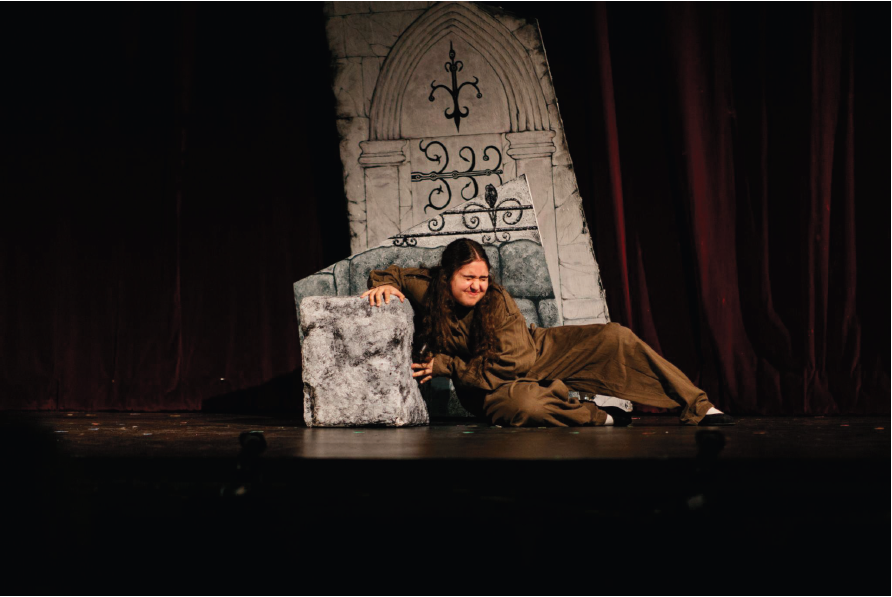
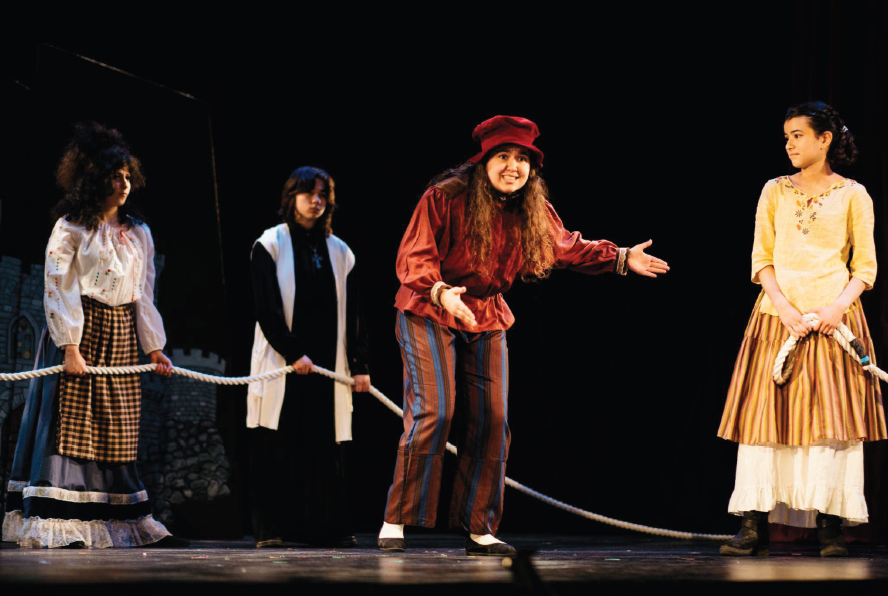
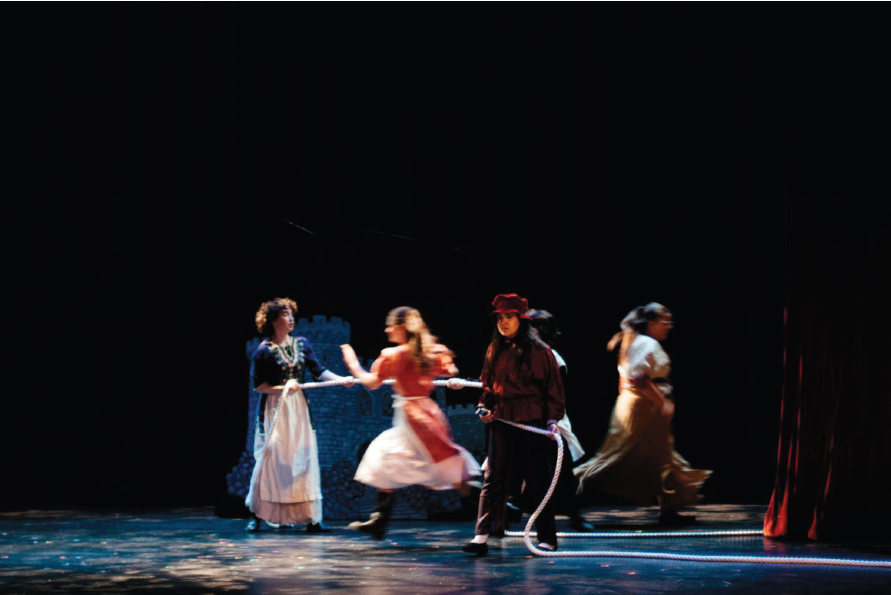
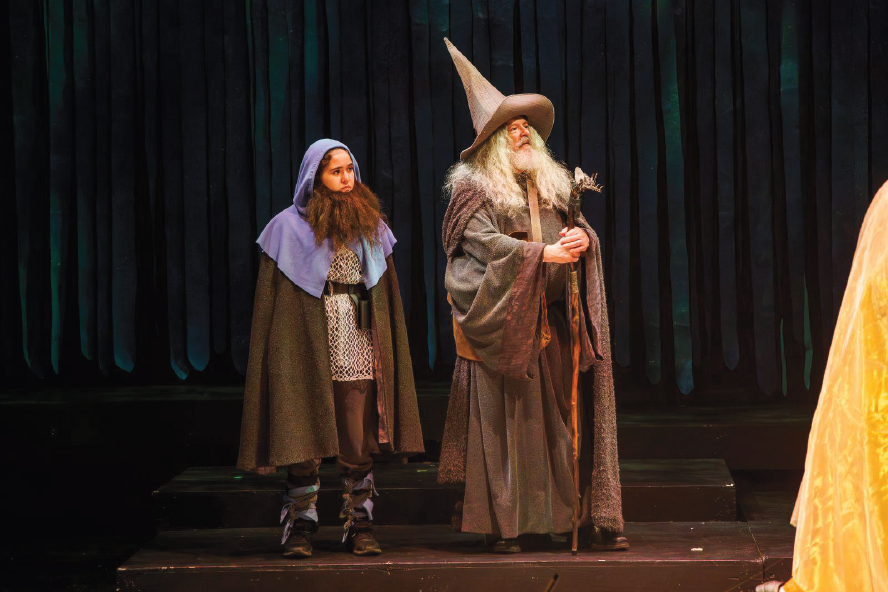
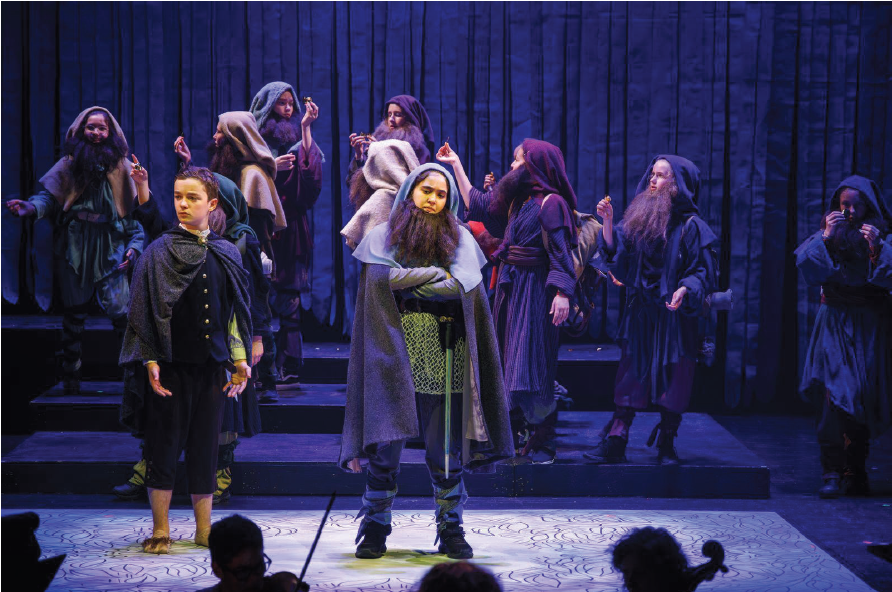
Marjorie: You did work on a relaxed performance for The Cunning Little Vixen, and how was that?
Lilia: Yeah, so that was a really cool… experience that was a really cool show. I had never actually heard of a relaxed performance before then. I was the frog in The Cunning Little Vixen that night.
I did a bit of research, and they spoke to us about it a bit, about how it would mainly be a difference in the audience… And it wouldn’t be much of a difference for us on stage, necessarily. I did the same staging that we had been doing throughout the whole run.
Did the same singing, had the same costume, and all of that, but when I got on stage, I did notice that the [house] lights were up, that people were moving more freely. So, I think… even just that, I had never thought that you could make opera accessible in that way to people. Who wouldn’t experience it before, or wouldn’t think to experience it before. Because…
It’s difficult, I think, especially in opera, that is such a traditional art form that’s always been an art form that only certain people can attend, I think there’s that stigma around opera. That it’s a bit of an elite art form. But it’s really not! And I think it was really cool to see who was in the audience that night, and see that they still resonated with the story, they were still able to experience this opera. And I remember seeing so many speak about how it was so nice to be able to experience an opera while still having their needs catered to. And that was really beautiful, I think.
Marjorie Chan:That’s… yeah, that’s such a wonderful way to see it, and to understand that. I think it’s important for artists to hear. It wasn’t much different for you. But the intent to invite people made that a full, different experience for the audience, that may not have felt that they could be welcome at that space.
But the fact that it didn’t change your artistic process all that much. To just open up a window that lets a few more people experience the form. Which I think we both love, that we both think is magical, so, you know, for me, I’m always like, Don’t we want to make it more accessible? Don’t we want more people to experience it?
What if money was no object, and you were in charge- what would you do to make opera more accessible?
Lilia: Good question. I think… you know, something that actually gave me a lot of ideas were the Accessibility Labs. that I found on the website, and that I watched. [ TPM’s Accessibility Labs, funded by Toronto Arts Council Open Doors]
One of them was about opera. There were so many ideas, so many aspects that I hadn’t thought about. That could so easily, I think, be integrated into opera, because opera in itself is already such a grand art form. It’s already such a dramatic art form that I think certain parts of accessibility could easily be integrated into the aesthetics or non-integrated, depending on the audience, depending on what it is. For example those lights that travel across the stage before a dramatic movement, or moment, or loud noise. So to be more sensory sensitive. [Steph Raposo’s lighting design to give audience cues as a part of No One Is Special at the Hot Dog Cart by Charlie Petch, which had a sensory-sensitive run]
I think that could be very very cool to see on a stage, because,as we all know, most operas have very dramatic moments, very… big moments, not just in the music, but also in the action. And opera is kind of that… art where… even when you’re expecting something dramatic, even when you’re expecting that, that’s kind of part of it.
You know, when you’re… when you’re experiencing an opera or watching it, I remember. Like, finding out that Carmen dies at the end of Carmen for the first time, and seeing it on stage, and that. And I think, you know, you’re expecting it, but expecting it… adds to, it enriches the experience. So… a light traveling across the stage to indicate that. It’s about to happen. Something big is going to happen, something… very loud is about to happen. It would enrich the experience. It wouldn’t make it less.
Marjorie: it’s design being a part of that conversation so that it can be more sensory sensitive. That’s not shifting anything about the opera. The opera hasn’t shifted. Something you were saying that I thought was very interesting, that is also access, that you talked about in terms of the relaxed performances, and that it’s opera, could be just for certain people, or like, you know, considered elitist.
So, how can we shift the conversation about opera so that it can… people can feel more welcome at it?
Lilia: I think that’s something that, in Toronto, I’m not sure about other places, but it has been shifting. I see the COC and the CCOC making efforts to shift that attitude around opera. Constantly. I think the COC has discounts, and memberships for people that are under a certain age. To invite more youth into the opera, because I do remember seeing my first opera and noticing that. I was, like, one of the youngest people there by far.
So, I think… that stigma that’s existed around opera isn’t…relevant anymore. It’s not what… it’s not what the companies want. You don’t want people to not feel like they can come and see an opera, because it’s a show, it’s a show that everybody should [see]… that can be universal. It’s not something that only certain people will understand, or certain people will enjoy. I think a good example is the relaxed performance. I noticed that there were a lot of much younger kids. You know, operas are long, operas are loud, operas are usually in a different language. So, sometimes it’s hard for a kid to sit through that, but thanks to things like relaxed performances, it’s not only for people who are sensory sensitive, it can also be for people of different ages. It can also help people who maybe aren’t comfortable going to the opera, who want to experience it in maybe not such a rigid form for the first time so I think it would… really help expand their audience if relaxed performances were more normalized in opera.
Lilia Javanrouh-Givi is a 17-year-old trilingual high school student. She is a motivated student, recently elected as minister of arts, culture, and mental health at her French high school and passionate of linguistic and art-based subjects. She is an avid lover of film, music, and the performing arts and is currently a Canadian Children’s Opera Company Young Artist Studio member.
~
Much gratitude for Lilia for her time and insights, as well as Associate Access Producer Kemi King for helping with the editing of this article.